
User Guide for Zoom Binoculars: Standard Operating Procedure
By Telescopehubs Optics - 22/06/2026 - 0 comments
The core operating logic of zoom binoculars is "focus first, zoom later"—meaning you should always calibrate the lenses for your eyes at the lowest magnification before switching to higher power. Here is the standard procedure:
1. Basic Physical Adjustments
Adjusting Interpupillary Distance (IPD): Hold the binoculars with both hands and pivot the two barrels until the left and right fields of view merge into a single, perfect circle, eliminating any double vision.
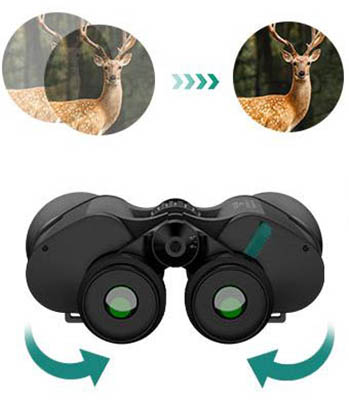
- Setting the Eyecups:
- If you wear glasses: Twist down or fold flat the eyecups.
- If you do not wear glasses: Twist up or extend the eyecups so your eyes rest comfortably against the edges, blocking out stray ambient light.
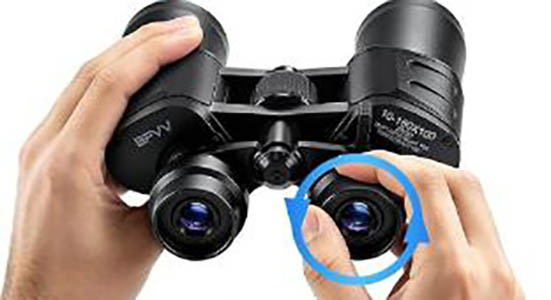
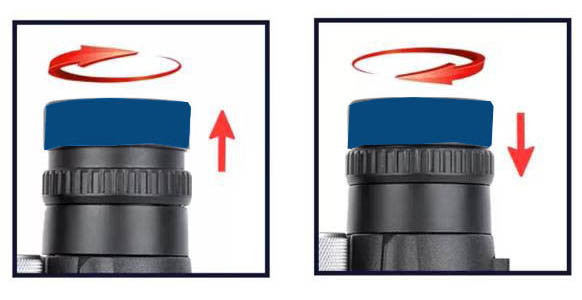
-
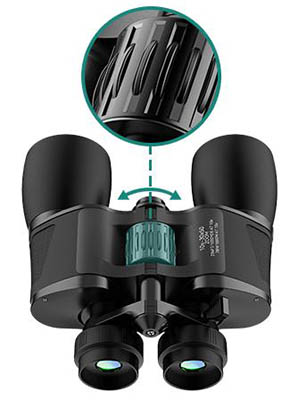
Diopter Calibration (Crucial Step): Move the zoom lever/ring to the lowest magnification (e.g., 8×).
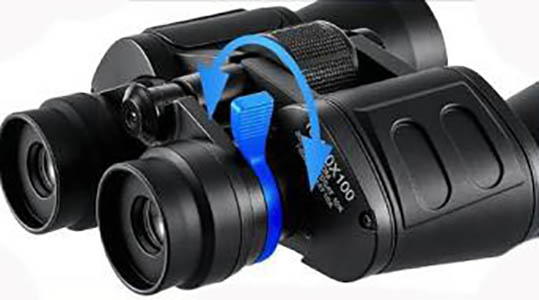
- Close your right eye and use your left eye to adjust the central focusing wheel until the target is sharp and clear.
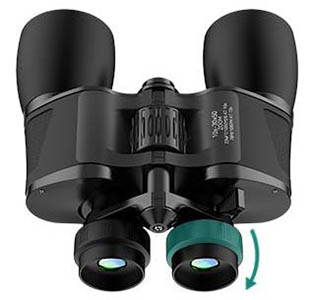
- Close your left eye and use your right eye to rotate the diopter adjustment ring on the right eyepiece (do not touch the central focusing wheel) until the target becomes sharp. Memorize or mark this position, as you won't need to change it later.
2. Zooming and Observation
-
Switching Magnification: Once calibration is complete, push or rotate the zoom lever/ring to your desired magnification. Because the diopter compensation is already set, you typically won't need major refocusing after zooming—just a slight fine-tuning of the central focusing wheel.
-
Handheld Stability: The higher the magnification, the more pronounced image shake becomes. For magnifications above 10×, using a tripod is highly recommended. For handheld observation, keep the zoom within 7–10× to maintain a stable, sharp image.
-
Dynamic Tracking: In scenarios like birdwatching or concerts, use the lowest magnification to locate your target first. Once locked on, smoothly zoom in for high-power detail observation. Avoid searching for targets directly at high magnification, as the narrow field of view makes them easy to lose.
3. Important Notes
-
Avoid Overusing Extreme Zoom: Entry-level or budget zoom binoculars may suffer from edge blur or chromatic aberration (color fringing) at their maximum magnification. It is better to choose a moderate magnification based on lighting and distance, rather than always pushing for the highest power.
-
Maintenance: The zooming mechanism is highly precise. Avoid applying excessive force, which can misalign the internal lens elements. Always put on the lens caps when not in use and store the binoculars in a dry place.
💡 Quick Tip: If you feel dizzy during your first use, it is usually because the diopter hasn't been properly calibrated or the magnification is too high. Simply dial back to the lowest magnification and repeat the "Diopter Calibration" process.
Tags: Zoom Binoculars, Binoculars Guide, How-To, Optics Tutorial, Outdoor Gear