
Low-Vision Optics: Choosing a Monocular/Binoculars for Signs and Events
By Telescopehubs Optics - 05/11/2026 - 0 comments
Q: What does a low-vision monocular actually do?
A: It magnifies distant detail so your usable vision can read it. Think of it as a one-eyed distance magnifier. You are not scanning the horizon for fun—you are solving a task: reading a street sign, checking a transit display, seeing a scoreboard, or watching a stage at a school concert. The goal is to buy the one you will actually carry, aim, and focus before the moment passes.
Q: Why does the field of view matter so much?
A: Because a sign is rarely floating in empty space. At 20×, you might see the letters clearly but lose the arrow or the gate number next to it. At 10×–15×, you keep more context—like knowing which way to turn after reading the sign. For events, context is half the experience; you want to see the performer and know what is happening around you.
Q: I also need to read closer things—menus, price tags, room signs. What spec do I check?
A: Check the close focus distance, not just magnification. Close focus tells you the nearest distance the optic can sharpen. If you want to read a menu board from 3 feet, a high-power model with a far minimum focus may still blur. For low-vision daily use, a model that focuses fairly close is worth more than raw power. It makes the monocular useful for café menus, grocery tags, and elevator directories.
Q: Do I need a big objective lens?
A: Bigger objective means more light, but also more size and weight. A smaller 20–25 mm objective is fine for daytime signs and indoor events with good lighting. A larger objective helps in dim auditoriums or evening games, but it turns a pocket tool into a hand weight. For daily carry, many users prefer something that fits in a coat pocket or small bag.
Q: I wear glasses. Will a monocular work for me?
A: Yes—but check two things: eye relief and adjustable eyecup. Eye relief is the distance your eye can sit from the eyepiece and still see the full circle. An adjustable eyecup that twists down lets glasses wearers get close without scraping the lenses. Also, check the diopter adjustment so you can fine-tune for one eye without removing your correction.
Tags: Low Vision, Monocular, Accessibility, Vision Aid, Signs, Events, Travel Accessibility, Independent Living
Best Sellers
Optics J‑Arm Mount Set, Helmet Adapter for Low‑Light Outdoor Viewing
Premium NVG Helmet Mount Kit – J‑Arm + Rhino‑Style Adapter Engineered for low‑light obs..
Asika Delta 10x42 Binoculars – Compact & Powerful for Sports, Travel & All Ages
Asika Delta 10x42 – Versatile & Powerful Compact Binoculars for Adults & Kids M..
Borwolf 25-75X80 ED Spotting Scope for Birding & Wildlife Observation
BORWOLF 25-75X80 ED Spotting Scope Kit – HD Waterproof Telescope Technical Specifications: ..
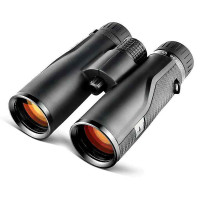
Shuntu PI ED Binoculars 8x42 10x42 10x50 12x50 – Roof Prism for Birding & Wildlife
Shuntu PI ED 8x42/10x42/10x50/12x50 BAK4 Binoculars – Professional HD Outdoor Optics for All Scenari..
Comments
Write a comment