
ED Glass vs FMC Coatings: Which Binocular Spec Actually Changes What You See?
By Telescopehubs Optics - 25/11/2026 - 0 comments
Q: I keep seeing "ED" and "FMC" on binocular boxes. Are they competing features?
A: Nope — they fix two completely different problems, and the good news is you can have both.
- ED (Extra-Low Dispersion) glass is a material choice. It's special optical glass inside the objective lens that bends red, green, blue, and violet light to nearly the same focal point. Result: less purple/green "color fringing" around high-contrast edges — a white bird against dark trees, the rim of the Moon, a ridge line at dawn .
- FMC (Fully Multi-Coated) is a surface treatment. Every single air-to-glass surface — objectives, eyepieces, prism faces — gets multiple layers of anti-reflection coating. Result: more light reaches your eye instead of bouncing off the glass, so the image is brighter, with punchier contrast and less glare .
Think of it this way: ED cleans up the color. FMC lets more light through. One is the recipe, the other is the non-stick pan.
Q: So if I have to pick one, which matters more?
A: Start with FMC. It's the baseline. A binocular labeled just "coated" or "multi-coated" is leaving light on the table — only "fully multi-coated" means all surfaces got the multi-layer treatment .
Then add ED when your budget clears the mid-tier (roughly $300+ in most North American lineups). ED starts earning its keep the moment you're staring into high-contrast light: shorebirds at midday, the Moon on a crisp October night, backlit warblers in spring .
💡 Rule of thumb: FMC is the floor. ED is the ceiling. A cheap ED binocular with weak coatings will look worse than a well-coated non-ED pair.
Q: How does this play out in the sizes people actually buy?
A: Here's how the spec conversation changes depending on the numbers on the hinge.
🔭 10×42 and 12×42 — the everyday carry pair
These are the North American default for birding, trail days, concerts in the park, and backyard nature watching. 42mm objectives are bright enough for dawn and dusk without the weight penalty of 50mm .
- FMC is non-negotiable here — you're often shooting into mixed light (tree shade, golden hour).
- ED is a nice-to-have. On a 10×42, ED really shines when you're picking apart plumage on a distant warbler or a shorebird against bright water .
- 12×42 gives you a bit more reach for open country, but hand-shake becomes noticeable after a few minutes — brace against a tree or rail.
🌌 10×50 and 12×50 — the dusk-and-dark pair
50mm objectives gather about 39% more light than 42mm , which is why these dominate stargazing, boat tours, whale watching, and mountain overlooks at last light.
- 10×50 is the classic handheld astronomy starter — 5mm exit pupil sits nicely with a dark-adapted eye .
- 12×50 buys you extra reach for lunar detail and distant ridgelines, but at 12× most adults want a tripod or a steady railing after a minute or two .
- Here ED matters more than on a 42mm, because the Moon's edge and bright planet discs are exactly where color fringing shows up .
🔱 15×50, 16×50, 20×50 — the "bring a tripod" pair
Past 12×, hand-holding is a fight you'll lose. These are for fixed-position viewing: a balcony overlooking a lake, a backyard star party, a scenic pull-off with a tripod adapter.
- 15×50 and 16×50 are the sweet spot for deep-sky targets from a supported position — star clusters, nebula patches, the Moon's crater floor .
- 20×50 is basically a mini spotting scope. Great for Moon detail and distant geography; useless handheld .
- At these magnifications, ED stops being luxury and starts being necessary — 20× magnifies optical flaws right along with the subject. Pair ED + FMC + a phase-coated BaK-4 prism and the view finally holds together .
🎯 10-20×50 and 10-30×50 — the zoom wildcard
Zoom binoculars are convenient for boat decks, stadium seats, and travel where you want one tool for everything.
- The trade-off: at the top of the zoom range (20× or 30×), the field of view narrows, hand-shake amplifies, and edge-of-frame sharpness softens — even on good glass.
- FMC is mandatory on a zoom, because you're already losing light to the extra moving lens groups.
- ED helps at the low-to-mid zoom setting; at 30× you'll want a tripod regardless of glass quality.
- Practical takeaway: buy a zoom for flexibility, not for peak sharpness. If peak sharpness is the goal, a fixed 10×50 or 12×50 with ED + FMC will beat it every time.
Q: Is ED glass worth the extra $150–300?
A: It depends entirely on where you look.
|
Your main use |
ED worth it? |
Why |
|---|---|---|
|
Backyard birding, good daylight |
Sometimes |
Nice on backlit birds, not critical |
|
Shoreline / open-country birding |
Yes |
High-contrast water + white plumage = fringing city |
|
Dawn/dusk nature walks |
Marginal |
FMC matters more than ED here |
|
Stargazing (Moon, planets) |
Yes |
Lunar rim and planet discs show color edges instantly |
|
Boat tours, whale watching |
Maybe |
Glare control (FMC) beats color correction (ED) on water |
|
Concerts, sports, travel |
No |
Put the money into 12×42 + FMC + lightweight body instead |
If you're on the fence, spend the money on FMC + phase-coated BaK-4 prisms + comfortable eye relief first. Those three change your experience every single time you pick the binoculars up. ED changes it on the hard views .
Q: What should I actually look for on the spec sheet?
A: Six lines, in this order:
- Fully Multi-Coated (FMC) — non-negotiable
- Prism glass: BaK-4 (not BK-7) with phase correction on roof prisms
- ED / HD / FL glass — if budget allows, and you do high-contrast viewing
- Eye relief ≥ 15mm if you wear glasses (16–20mm is ideal)
- Close focus ≤ 6.5 ft if you like butterflies and feeder birds
- Waterproof + nitrogen-purged — because Caroline-asphalt-in-August fog is real
Everything else on the box is marketing .
Q: Bottom line — what should a typical buyer get?
A: Three honest recommendations based on how people actually use binoculars in North America:
- "One pair for everything outdoors" → 10×42, FMC, phase-coated BaK-4, ED if you can swing it. Covers birding, hiking, concerts, ball games, and casual night sky.
- "I mostly look at the night sky" → 10×50 ED + FMC, add a $25 tripod adapter. Upgrade to 15×50 only once you have a real tripod.
- "I'm on boats / canyon overlooks / open water" → 12×50 FMC (ED optional), or a 10-20×50 zoom if you genuinely need variable power and don't mind the edge-softness at the top end.
Best Sellers
Optics J‑Arm Mount Set, Helmet Adapter for Low‑Light Outdoor Viewing
Premium NVG Helmet Mount Kit – J‑Arm + Rhino‑Style Adapter Engineered for low‑light obs..
Asika Delta 10x42 Binoculars – Compact & Powerful for Sports, Travel & All Ages
Asika Delta 10x42 – Versatile & Powerful Compact Binoculars for Adults & Kids M..
Borwolf 25-75X80 ED Spotting Scope for Birding & Wildlife Observation
BORWOLF 25-75X80 ED Spotting Scope Kit – HD Waterproof Telescope Technical Specifications: ..
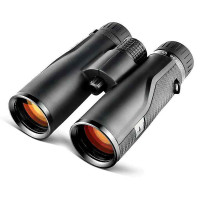
Shuntu PI ED Binoculars 8x42 10x42 10x50 12x50 – Roof Prism for Birding & Wildlife
Shuntu PI ED 8x42/10x42/10x50/12x50 BAK4 Binoculars – Professional HD Outdoor Optics for All Scenari..
Comments
Write a comment