
The Ultimate Telescope Buying Guide 2026: A Complete Analysis of Aperture, Focal Length, and Equatorial Mounts
By Mindy Hamblin - 07/09/2026 - 0 comments
In 2026, while astronomical observation technology has matured, beginners still often fall into the traps of "aperture obsession" or "blindly chasing high magnification." Choosing a telescope isn't just about comparing specs; it's about balancing optical performance, mechanical stability, and portability. This guide provides professional advice on core optical parameters, mount systems, and practical applications.
I. Core Optical Metrics: The Golden Rules of Aperture and Focal Length
1. Aperture: The Deciding Factor for Light-Gathering Power
Aperture refers to the effective diameter of the objective lens, directly determining the telescope's light-gathering ability and resolution.
-
Entry-Level Sweet Spot (70mm-80mm): Ideal for beginners to observe lunar craters, Jupiter's bands, and Saturn's rings. Equipment in this range is lightweight, cost-effective, and great for sparking interest.
-
Advanced Deep-Sky (100mm and above): For faint deep-sky objects like the Orion Nebula or Andromeda Galaxy, a 102mm or larger aperture is required to collect more photons. However, this significantly increases size and weight.
-
Note: Don't blindly chase large apertures at the expense of portability. If the equipment is too heavy to carry, it will eventually gather dust at home.
2. Focal Length and F-Ratio
Focal length determines magnification potential, while the F-ratio (focal length / aperture) affects imaging characteristics.
-
Long Focal Ratio (F/10 and above): E.g., a 90mm aperture with a 900mm focal length. Offers good chromatic aberration control and sharp imaging, designed for high-contrast targets like planets and the moon.
-
Medium-Short Focal Ratio (F/5 to F/7): Provides a wider field of view, suitable for observing large nebulae and star clusters. For short-tube refractors, watch out for chromatic aberration; multi-coated lenses are recommended to improve light transmission and color accuracy.
-
Formula Reference: Magnification = Objective Focal Length / Eyepiece Focal Length. However, the maximum useful magnification usually does not exceed 2x the aperture in millimeters. Excessive magnification only results in dim and blurry images.
II. Mount Systems: Alt-Azimuth vs. Equatorial
The mount is not just a support; it often determines the ceiling of your observing experience. Its cost often accounts for 50% or more of the entire setup.
1. Alt-Azimuth Mount
-
Principle: Based on vertical (altitude) and horizontal (azimuth) movements, matching human intuition.
-
Pros: Simple to operate, no complex calibration needed; lightweight structure, easy to carry and set up quickly; ideal for high-magnification visual planetary observation and terrestrial viewing.
-
Cons: Tracking celestial objects requires adjusting both axes simultaneously; prolonged observation causes "field rotation," making it completely unsuitable for deep-sky astrophotography.
-
Best For: Visual observers, beginners, urban balcony users.
2. Equatorial Mount
-
Principle: The main axis is parallel to the Earth's axis (pointing at Polaris), counteracting Earth's rotation with a single-axis turn.
-
Pros: Precise single-axis tracking, stable field of view without rotation; supports long-exposure photography; essential for deep-sky astrophotography.
-
Cons: Complex operation; requires precise "polar alignment" every time; bulky equipment requiring counterweights; steep learning curve for beginners.
-
Best For: Advanced users with a clear intent for astrophotography who are willing to invest time in learning.
III. Pitfall Avoidance & Maintenance Tips
-
Reject False Advertising: Beware of cheap toy telescopes boasting "hundreds of times magnification" or "seeing the national flag." Quality telescopes focus on optical coatings and mechanical stability, not inflated magnification.
-
Importance of Accessories: The type of finderscope (red dot or optical), eyepiece quality, and tripod stability directly impact the experience. Kits with barlow lenses and smartphone adapters are better suited for modern users to record and share their views.
-
Routine Maintenance:
-
Lens Cleaning: Never touch the lenses with your hands. Blow off dust with a blower bulb and let moisture dry naturally. Never wipe with a cloth to avoid scratching the coatings.
-
Equatorial Mount Care: Regularly apply special grease to the gears to prevent rust and backlash. Remove batteries if not in use for a long time, and store in a dry, ventilated place.
-
Polar Alignment: When using an equatorial mount, realign with Polaris every time you set up. This is the basic skill for ensuring tracking accuracy.
-
Summary: Follow the principle of "defining your goals and knowing your limits." If you only stargaze occasionally, a lightweight altazimuth refractor is the best choice. If you aim for deep-sky astrophotography, be prepared to learn equatorial mount operations and handle the equipment's weight. The best telescope is the one you are most willing to carry outside often.
Tags: telescope buying guide, telescope aperture, focal length, equatorial mount, alt-azimuth mount, astronomy for beginners, stargazing, telescope selection, deep sky observation, optical instruments, 2026 telescope guide
Best Sellers
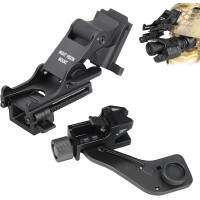
Optics J‑Arm Mount Set, Helmet Adapter for Low‑Light Outdoor Viewing
Premium NVG Helmet Mount Kit – J‑Arm + Rhino‑Style Adapter Engineered for low‑light obs..
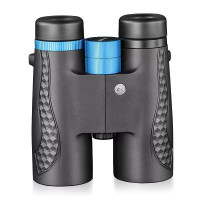
Asika Delta 10x42 Binoculars – Compact & Powerful for Sports, Travel & All Ages
Asika Delta 10x42 – Versatile & Powerful Compact Binoculars for Adults & Kids M..
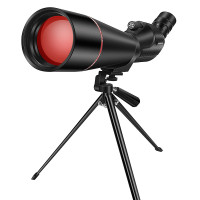
Borwolf 25-75X80 ED Spotting Scope for Birding & Wildlife Observation
BORWOLF 25-75X80 ED Spotting Scope Kit – HD Waterproof Telescope Technical Specifications: ..
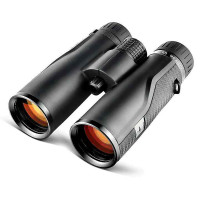
Shuntu PI ED Binoculars 8x42 10x42 10x50 12x50 – Roof Prism for Birding & Wildlife
Shuntu PI ED 8x42/10x42/10x50/12x50 BAK4 Binoculars – Professional HD Outdoor Optics for All Scenari..
Comments
Write a comment